Driveway Slope and Drainage in Ocala: How to Prevent Water Damage
Every summer in Ocala, the afternoon sky opens up. Marion County sees rain on roughly 21 days in July alone, and a single storm can drop more than an inch of water in a short window. All of that water has to go somewhere, and if your driveway isn't sloped and drained correctly, "somewhere" ends up being the low spots on your slab, the soil underneath it, and sometimes your garage or foundation. Over time, that standing and pooling water is one of the most common and most preventable causes of driveway damage we see in Central Florida.

The good news is that a driveway built with the right slope and a smart drainage plan sheds our summer storm load the way it's supposed to. This guide explains why drainage matters so much in Ocala specifically, how proper slope actually works, the drainage options that fit our sandy soil and heavy rain, the warning signs that your current driveway isn't draining right, and what to do about it. Whether you're planning a new driveway or trying to fix an existing water problem, you'll come away knowing what good drainage looks like and what to ask any contractor before the first pour.
Why Driveway Drainage Is a Bigger Deal in Ocala Than Most Places
Drainage matters everywhere, but a few things about Central Florida make it especially critical here. Understanding them is the first step to protecting your investment.
Our Summer Storm Load Is Intense
Ocala doesn't get gentle, all-day drizzle. We get concentrated, high-volume downpours, mostly from June through September, when afternoon thunderstorms roll through nearly every day. July is the wettest month, with rain falling on about 21 days and totaling around two and a half inches on average, and individual storms can be far heavier. A driveway here isn't managing a little runoff. It's repeatedly handling short bursts of a lot of water, and it has to move that water off the surface fast.
Sandy Soil Cuts Both Ways
Central Florida's sandy soil drains quickly, which sounds like a drainage advantage, and in some ways it is. But that same loose, sandy subgrade is easily eroded and moved by fast-flowing water. When runoff is allowed to channel along the edge of a slab or collect against it, it can wash out the sand supporting the concrete, leaving hollow voids underneath. Once a slab loses its support from below, it settles, cracks, and fails. So in Ocala, good drainage isn't only about the surface of the driveway. It's about protecting the ground the driveway rests on.
Water Finds Your Foundation
A driveway that slopes toward your house, or one with a low spot near the garage, funnels storm water exactly where you don't want it. Repeated pooling against a foundation or intrusion into a garage can lead to moisture problems, staining, and costly damage well beyond the driveway itself. Directing water away from the structure is a core reason slope and drainage get planned carefully before any concrete is poured.
How Driveway Slope Actually Works
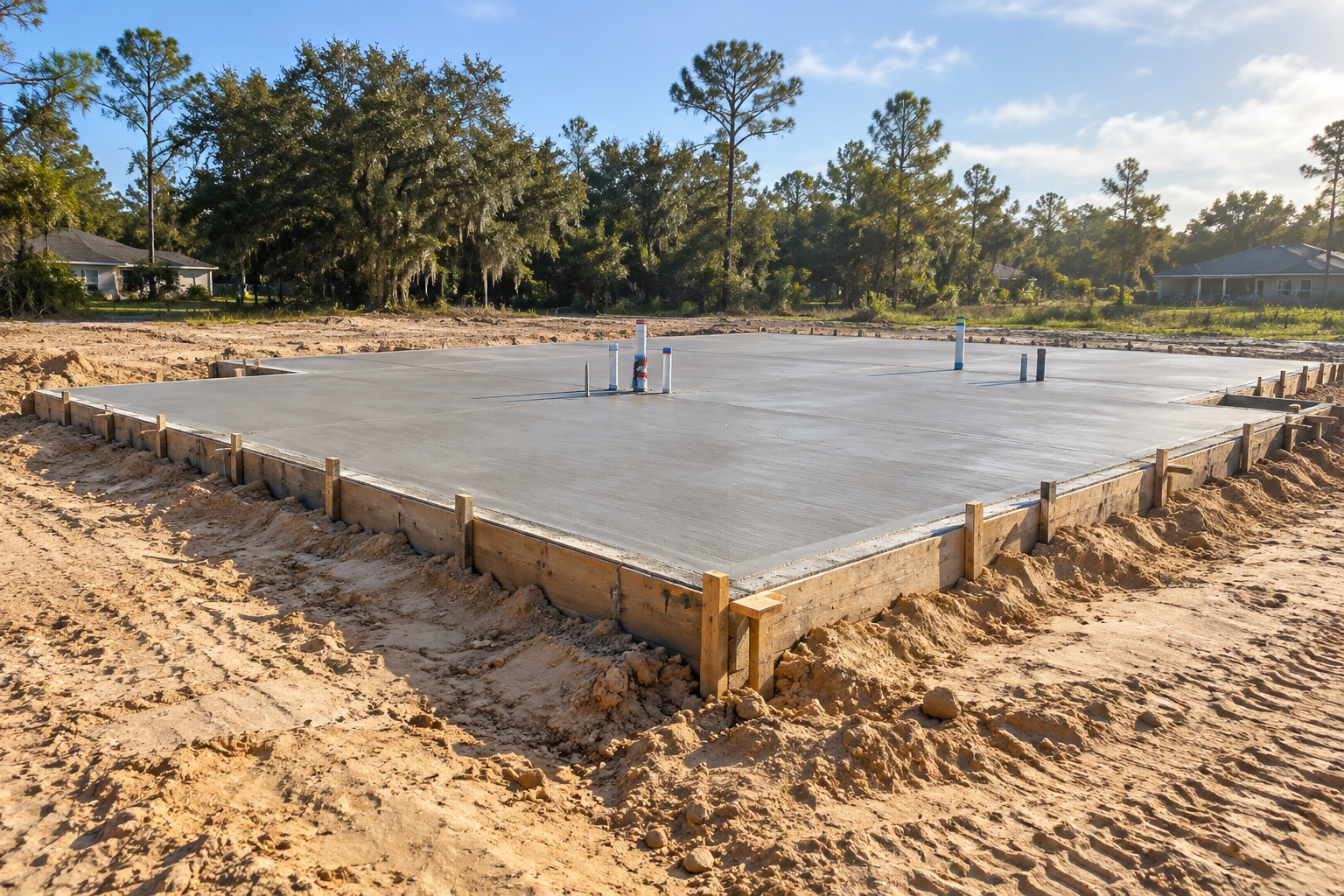
Slope, also called grade or pitch, is simply the controlled tilt that lets gravity carry water off your driveway to where you want it to go. It's the single most important drainage feature, and it's decided before the concrete is ever poured, during grading and site prep. Get it right and most of your water problems never happen. Get it wrong and no amount of patching fully fixes it.
The general standard the concrete industry uses for driveways is a minimum slope of about one quarter inch of fall per foot of length, which works out to roughly a two percent grade. In plain terms, for every four feet the driveway runs, the surface should drop about one inch in the direction you want water to flow. That's usually enough to move water reliably without the driveway feeling steep or looking tilted.
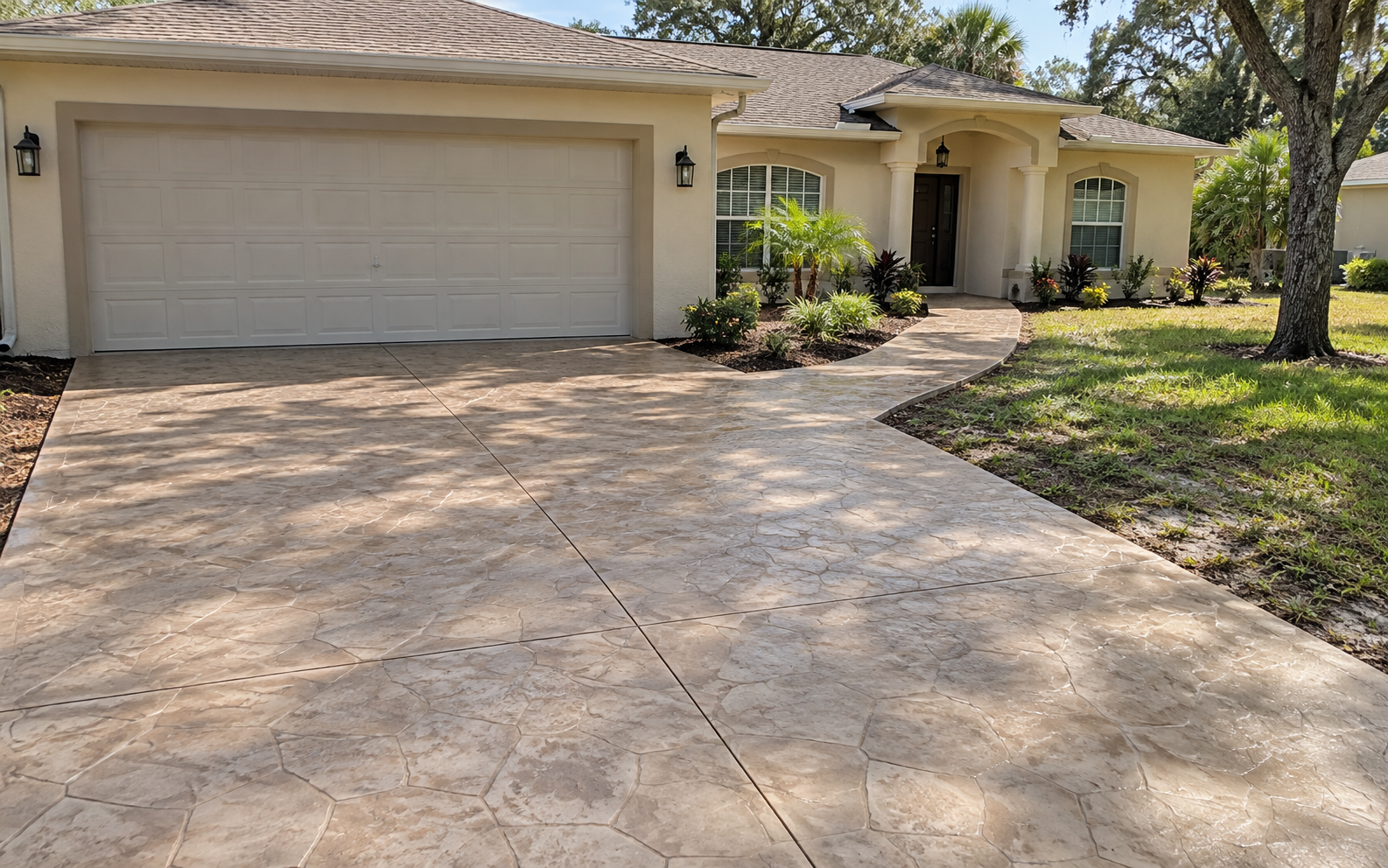
Two principles matter as much as the number itself. First, a driveway should almost always slope away from your home and garage, never toward them. Second, the slope needs to actually lead somewhere useful, a yard, a swale, the street, or a drainage feature, rather than just pushing water into a neighbor's property or a spot where it will pool. On flat lots, which are common around Ocala, achieving proper fall takes deliberate planning during site prep, because the natural grade won't do the work for you. This is exactly the kind of detail that separates a driveway built to last from one that develops water problems in its first rainy season, and it's why proper grading is part of every quality concrete driveway installation.
Drainage Solutions That Work in Central Florida
Slope handles most of the job, but many Ocala driveways benefit from additional drainage features, especially on flat lots, long driveways, or properties where the surrounding ground doesn't naturally carry water away. Here are the options that hold up well in our climate and soil.
Proper Grading and Slope
This is the foundation of all driveway drainage and the first line of defense. Correct grading during site prep, sloping the surface away from the structure toward a suitable outlet, prevents the majority of pooling problems before they start. Everything else supports this.
Trench or Channel Drains
A trench drain is a long, narrow grated channel set into the driveway surface, often near the garage or at the bottom of a slope, that catches sheet water and carries it away through a pipe. These are excellent for driveways that slope toward a garage or a low point, because they intercept water right where it would otherwise pool and route it somewhere safe. For many Ocala homes with a garage at the low end of the drive, a channel drain is the difference between a dry garage and a recurring flooding problem.
Swales
A swale is a shallow, gently sloped landscaped depression that guides water away from the driveway and lets it soak into the ground or flow to a drainage point. Swales work well alongside driveways on larger or more open Ocala lots, using the landscape itself to manage runoff naturally.
French Drains
A French drain is a gravel-filled trench with a perforated pipe that collects water from a problem area and redirects it underground. These help where water tends to collect alongside or below a driveway, moving subsurface and surface water away from the slab and protecting that sandy subgrade from washout.
Permeable Edges and Thoughtful Layout
Sometimes the best drainage solution is in how the driveway meets the surrounding landscape, using graded borders, gravel margins, or planting beds positioned to receive and absorb runoff. A good contractor looks at the whole site, not just the slab, when planning where water will go.
The right mix depends entirely on your lot, your slope, and where water naturally wants to travel. Below is a quick comparison to help you understand the options.
| Drainage Solution | Best For | How It Helps |
|---|---|---|
| Proper grading & slope | Every driveway | Sheds surface water away from the structure; the essential first step |
| Trench / channel drain | Driveways sloping toward a garage or low point | Intercepts pooling water and pipes it away |
| Swale | Larger or open lots | Uses landscaped depression to carry runoff naturally |
| French drain | Spots where water collects beside or under the slab | Redirects surface and subsurface water underground |
| Permeable edges | Lots with room to absorb runoff | Lets bordering ground soak up overflow |
Warning Signs Your Driveway Isn't Draining Correctly
If you already have a driveway, it will usually tell you when drainage is a problem. Watch for these signs, especially during and right after our summer storms.
Standing water or puddles that linger on the surface hours after the rain stops are the clearest signal that slope or drainage is inadequate. Water flowing toward your home or garage rather than away from it points to a slope problem that needs correcting. Cracks that appear along with settling or a section of the slab sitting lower than the rest often mean water has washed out the sandy base underneath. Soil erosion, exposed dirt, or gullies along the edges of the driveway show that runoff is channeling and carrying your subgrade away. Staining, efflorescence (a white mineral residue), or a persistently damp surface can indicate water is sitting where it shouldn't. And moisture, water intrusion, or dampness in the garage after storms is a strong sign that water is being directed toward the structure instead of away from it.
Any one of these is worth a professional look. Caught early, a drainage issue is far cheaper to correct than the slab settlement, cracking, or foundation problems it eventually causes.
What Poor Drainage Actually Costs You Over Time
It's easy to look at a puddle on the driveway and think of it as a minor annoyance. The problem is that water damage compounds. A drainage flaw that seems cosmetic in year one quietly does structural work underneath the slab, and the repair bill grows the longer it goes unaddressed. Understanding that progression is what motivates most Ocala homeowners to fix drainage sooner rather than later.
It usually starts small. Water pools in a low spot after each storm and lingers. In our climate, that same spot gets soaked again the next afternoon, and the next, all through the summer wet season. Standing water works its way into the tiny pores and hairline cracks in the surface. Over time it stains the concrete, encourages algae and slick spots, and begins to break down the finish. At this stage the damage is still mostly on the surface and relatively affordable to address.
The more serious cost is what happens below. Every time fast-moving runoff channels against the edge of the slab, it carries away a little more of the sandy subgrade that supports the concrete. You can't see it happening, but the void beneath the driveway grows. Eventually the unsupported section can no longer carry the weight of a vehicle, and it cracks and settles, often suddenly. Now you're no longer looking at a cleaning or a sealant. You're looking at slab repair or replacement, plus correcting the grade that caused it, because patching the crack without fixing the drainage just resets the same countdown.
The most expensive outcome is when misdirected water reaches the house. A driveway that funnels storm water toward a garage or foundation can lead to moisture intrusion, damaged flooring, and foundation issues that cost far more than the driveway itself ever did. This is the scenario proper slope is specifically designed to prevent, and it's why directing water away from the structure is treated as non-negotiable during planning. The throughline is simple: the cheapest moment to deal with driveway drainage is always before it becomes a subgrade problem, and the moment before that is during design and installation.

New Driveway vs. Fixing an Existing Drainage Problem
How you address drainage depends on where you're starting from.
If you're planning a new driveway, you're in the best possible position, because drainage is far easier and cheaper to build in correctly than to retrofit later. This is the time to get the slope, grading, and any needed drains designed right from the start. A contractor who knows Ocala will assess your lot's natural grade, figure out where water needs to go, set the proper fall away from your home, and recommend any channel drains or swales your specific site calls for, all before pouring. Done right, you may never think about driveway drainage again.
If you're dealing with an existing driveway that pools, floods, or shows the warning signs above, the fix depends on the cause. Sometimes adding a trench drain or improving the grading around the slab solves it. In other cases, particularly where poor drainage has already washed out the base and caused settling or major cracking, replacing the driveway and correcting the underlying grade is the more cost-effective long-term solution than repeatedly patching a slab that will keep failing. The key is diagnosing why the water is misbehaving before spending money on a fix, so you solve the actual problem rather than the symptom.
What to Ask Before You Hire
Because so much of good drainage is decided before the pour, the questions you ask a contractor up front tell you a lot about the driveway you'll end up with. A few worth raising:
- How will you slope my driveway, and where will the water go?
- How are you preparing and compacting the base for our sandy soil?
- Does my lot need any additional drainage, like a channel drain or swale?
- How will you keep water away from my garage and foundation?
A contractor who answers these clearly and specifically, in terms of your actual property, is one who plans drainage properly. Vague answers are a warning sign.
Keeping Your Driveway Draining Well Year-Round
Even a perfectly sloped driveway with the right drainage features needs a little upkeep to keep performing, especially heading into Ocala's summer storm season. A few simple habits protect the work and help you catch small issues before they turn into the costly ones described above.
Keep drains and channels clear. If your driveway has a trench drain, channel drain, or nearby grate, leaves, sand, and debris will collect in it over time, particularly after storms. A clogged drain can't move water, so a channel that was doing its job in year one can quietly back up and start causing pooling if it's never cleaned. A quick check and clear-out before and during the rainy season keeps them working.
Watch the edges and the surrounding grade. Because our sandy soil erodes with fast-moving water, keep an eye on the borders of your driveway for washout, exposed dirt, or small gullies forming. Maintaining healthy ground cover, mulch, or landscaping alongside the slab helps hold that soil in place and absorb runoff. If you notice the grade beside the driveway starting to channel water rather than spread it, that's worth addressing early.
Do a post-storm walkthrough. The best time to spot a drainage problem is right after a heavy Ocala downpour. Take a minute to see where water goes and where it lingers. If puddles are sitting in the same spot every time, or you see water tracking toward the garage or house, you've found an issue worth having looked at before it works on the base underneath.
Seal the surface on schedule. Sealing isn't a drainage fix, but it does protect the concrete from the moisture, staining, and surface wear that standing water accelerates. A sealed driveway shrugs off the effects of our wet season better than a bare one, and it's a low-effort way to extend the life of the slab.
None of this replaces proper slope and drainage built in from the start, but it protects that investment. Think of it the way you'd think of cleaning your gutters before hurricane season: a small, seasonal habit that prevents a much bigger headache.
The Bottom Line
In Ocala, driveway drainage isn't an afterthought, it's the difference between a slab that shrugs off our summer storms for decades and one that pools, cracks, settles, and sends water toward your foundation. The two things that matter most are proper slope, a minimum of about a quarter inch of fall per foot leading away from your home, and a drainage plan matched to your specific lot and soil. Both are decided before the concrete is poured, which is why planning matters so much and why experienced local installation makes such a difference. Whether you're building new or fixing a water problem, getting the grade and drainage right protects everything else.
If your driveway pools after storms, sends water toward your garage, or you're planning a new driveway and want it built to handle Central Florida's rain from day one, Tradition Concrete can help. As a local, family-owned, licensed and insured Ocala concrete contractor, we assess each property's grade, soil, and drainage before we pour, so your driveway is built to move water the right way. Contact us for a free estimate and let's make sure your driveway is ready for the next downpour.
Frequently Asked Questions
How much slope does a driveway need in Florida?
The general industry standard is a minimum of about a quarter inch of fall per foot of length, which is roughly a two percent grade, sloped away from your home and garage. That's usually enough to move water off the surface reliably without the driveway feeling steep. On the flat lots common around Ocala, achieving proper fall takes deliberate planning during grading, since the natural grade won't do it for you.
Why does water pool on my driveway after it rains?
Standing water almost always means the slope is inadequate or uneven, so water has no clear path off the surface. It can also point to settling, where a section of the slab has sunk because water washed out the sandy base underneath. Both are worth a professional assessment, since lingering water leads to further damage over time.
Can poor driveway drainage really damage my home's foundation?
Yes. A driveway that slopes toward your house or has a low spot near the garage funnels storm water toward the structure. Repeated pooling against a foundation or intrusion into a garage can cause moisture problems and costly damage. Directing water away from the home is one of the main reasons slope and drainage are planned carefully before pouring.
What drainage options work best for Ocala driveways?
It depends on your lot. Proper grading and slope is the essential first step for every driveway. Beyond that, trench or channel drains work well for driveways that slope toward a garage, swales suit larger open lots, and French drains help where water collects beside or under the slab. A local contractor matches the solution to your specific property.
Is it better to fix my existing driveway's drainage or replace it?
If the problem is limited to grading or a missing drain, a targeted fix like adding a channel drain or improving the surrounding grade may solve it. But if poor drainage has already washed out the base and caused settling or major cracking, replacing the driveway and correcting the underlying grade is usually the better long-term value than repeatedly patching a failing slab. Diagnosing the cause first is key.
How does Ocala's sandy soil affect driveway drainage?
Sandy soil drains quickly, but it also erodes easily when fast-moving water channels against a slab, washing out the support underneath and leading to voids, settling, and cracks. That's why good drainage in Ocala protects not just the surface but the subgrade the driveway sits on, using proper slope and, where needed, drains to keep runoff from eroding the base.